آخر تحديث: 25 May, 2026
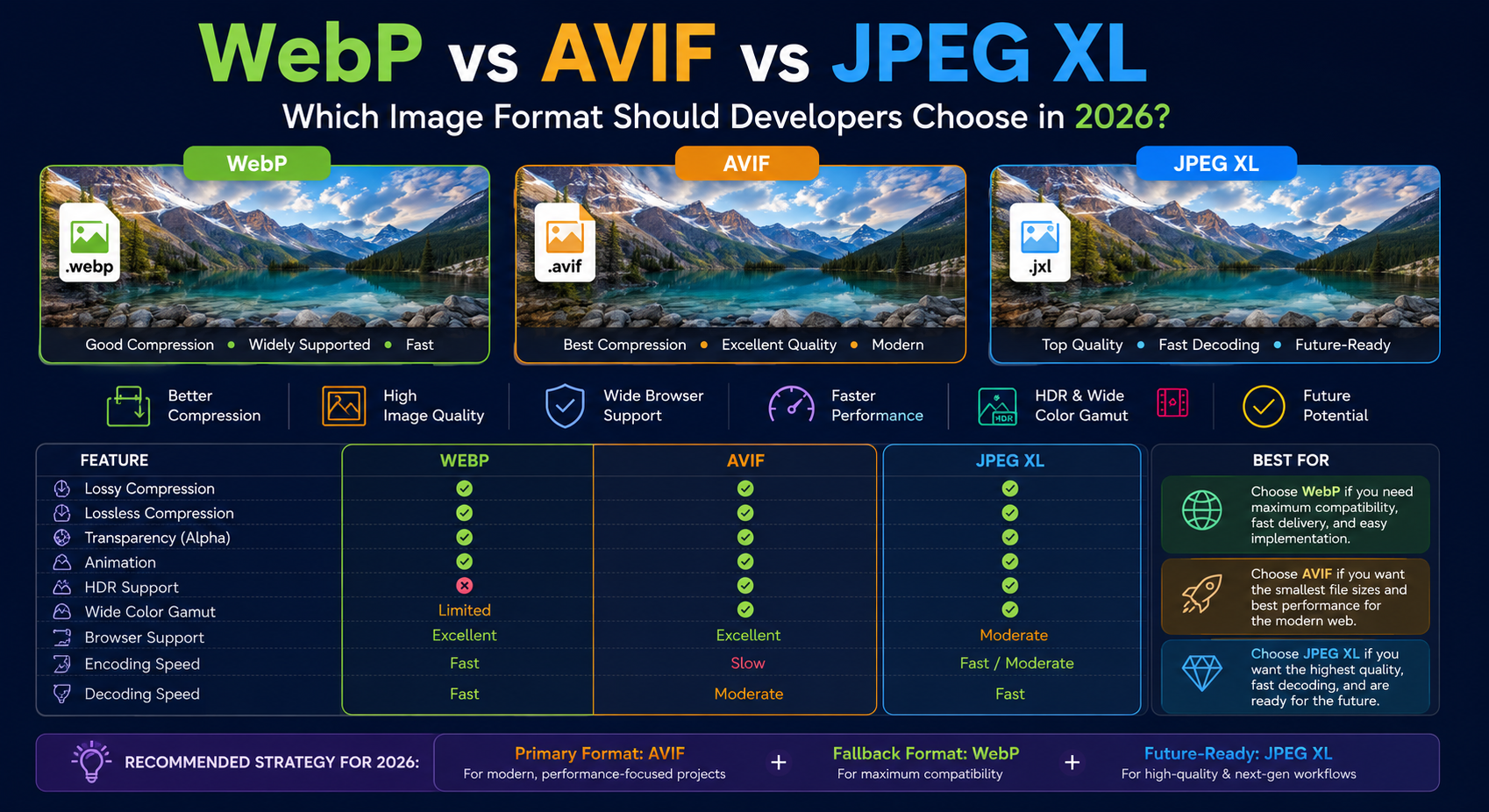
Images are no longer just design assets—they directly impact website speed, SEO rankings, user experience, bandwidth costs, and even conversion rates. In 2026, developers have more choices than ever when optimizing images for the web and applications. Traditional formats like JPEG and PNG still exist, but modern alternatives such as WebP, AVIF, and JPEG XL are redefining image delivery standards. Each format promises better compression, improved quality, and smaller file sizes, but choosing the right one is not always straightforward.
Should developers continue relying on WebP? Is AVIF finally mature enough for production? And does JPEG XL deserve a second chance despite its complicated browser journey? This guide compares WebP, AVIF, and JPEG XL across performance, compatibility, image quality, encoding speed, and practical developer use cases to help you decide which image format to use in 2026.
ما هو WebP؟
WebP is an image format developed by Google to replace older formats like JPEG, PNG, and GIF.
يدعم:
- ضغط فقدان الجودة
- ضغط بدون فقدان
- الشفافية (قناة ألفا)
- الرسوم المتحركة
WebP became widely adopted because it offers significantly smaller file sizes than JPEG and PNG while maintaining acceptable visual quality.
الفوائد الرئيسية لـ WebP
- توافق ممتاز مع المتصفحات
- أحجام ملفات أصغر من JPEG
- يدعم الشفافية مثل PNG
- يدعم الصور المتحركة مثل GIF
قيود WebP
- كفاءة الضغط الآن تفوقها AVIF و JPEG XL
- قد تتدهور الجودة عند مستويات ضغط عالية
- دعم محدود لتقنية HDR والميزات اللونية المتقدمة
ما هو AVIF؟
AVIF stands for AV1 Image File Format and is based on the AV1 video codec. It is designed for next-generation image compression and offers outstanding compression efficiency.
يدعم AVIF:
- ضغط فقدان الجودة
- ضغط بدون فقدان
- HDR
- نطاق ألوان واسع
- الشفافية
- الرسوم المتحركة
AVIF is often considered the most space-efficient image format currently available for web delivery.
الفوائد الرئيسية لـ AVIF
- ضغط متفوق مقارنةً بـ WebP
- جودة صورة ممتازة عند معدلات بت منخفضة
- دعم HDR وألوان 10‑بت
- مناسب للصور المتجاوبة على الويب
قيود AVIF
- أوقات ترميز أبطأ
- فك ترميز يستهلك المزيد من وحدة المعالجة المركزية
- خطوط تنفيذ معقدة
ما هو JPEG XL؟
JPEG XL is a next-generation image format created by the Joint Photographic Experts Group (JPEG) committee. It was designed as a universal successor to JPEG with better compression, higher quality, and backward-friendly migration.
يدعم JPEG XL:
- ضغط فقدان الجودة
- ضغط بدون فقدان
- فك ترميز تدريجي
- الرسوم المتحركة
- HDR
- نطاق ألوان واسع
- شفافية ألفا
Unlike AVIF, JPEG XL prioritizes both compression and developer usability.
الفوائد الرئيسية لـ JPEG XL
- نسب ضغط ممتازة
- فك ترميز سريع جدًا
- عرض تدريجي أفضل
- حفظ صورة بدقة عالية
- إعادة ضغط JPEG دون فقدان الجودة
قيود JPEG XL
- اعتماد المتصفحات لا يزال غير متسق
- أدوات النظام البيئي لا تزال في مرحلة النمو
مقارنة WebP vs AVIF vs JPEG XL
1. كفاءة الضغط
Compression matters because smaller images improve:
- سرعة الصفحة
- تكاليف CDN
- أداء الهواتف المحمولة
- مقاييس Core Web Vitals
WebP
WebP generally reduces JPEG sizes by 25–35%.
الأفضل لـ: تحسين الويب العام.
AVIF
AVIF often delivers 40–60% smaller files than JPEG while preserving impressive detail.
الأفضل لـ: الضغط الأقصى.
JPEG XL
JPEG XL usually competes closely with AVIF and sometimes beats it depending on image content.
الأفضل لـ: ضغط متوازن وسرعة.
الفائز: AVIF
AVIF usually provides the smallest file sizes.
2. جودة الصورة
Compression is useless if quality suffers.
WebP
WebP performs well, but artifacts become noticeable at aggressive compression.
تقييم الجودة: جيدة
AVIF
AVIF preserves detail extremely well, especially for:
- التدرجات
- التصوير الفوتوغرافي
- محتوى HDR
تقييم الجودة: ممتازة
JPEG XL
JPEG XL often produces more visually pleasing results than AVIF, especially for:
- قوام دقيقة
- النص
- الرسوم التوضيحية
تقييم الجودة: ممتازة+
الفائز: JPEG XL
JPEG XL often offers the best visual fidelity.
3. دعم المتصفحات في 2026
Adoption is critical for production deployment.
دعم WebP
Supported by:
- Chrome
- Firefox
- Safari
- Edge
- Opera
التغطية: قريبًا من الشمولية
دعم AVIF
Supported by:
- Chrome
- Firefox
- Safari
- Edge
AVIF is now widely supported across major browsers.
التغطية: ممتازة
دعم JPEG XL
JPEG XL support remains mixed in 2026. Some browsers and ecosystems support it, while others still lag.
التغطية: محدودة إلى معتدلة
الفائز: WebP
WebP remains the safest compatibility choice.
4. سرعة الترميز
Encoding speed matters for:
- خطوط بناء
- رفع المحتوى عبر CMS
- معالجة الصور الديناميكية
WebP
Fast encoding and broad tooling.
الأداء: سريع
AVIF
Encoding can be slow, especially at higher quality levels.
الأداء: بطيء
JPEG XL
Much faster than AVIF while maintaining strong compression.
الأداء: سريع إلى متوسط
الفائز: WebP / JPEG XL
Tie depending on workflow.
5. سرعة فك الترميز
Decoding affects:
- الأجهزة المحمولة
- استخدام وحدة المعالجة المركزية
- سرعة العرض
WebP
Fast decoding.
AVIF
Can be CPU-heavy.
JPEG XL
Very fast decoding.
الفائز: JPEG XL
Best runtime efficiency.
6. دعم الرسوم المتحركة
WebP
Excellent animation replacement for GIF.
AVIF
Supports animation but tooling is less mature.
JPEG XL
Supports animation with better compression.
الفائز: JPEG XL
Most advanced animation capabilities.
جدول مقارنة الميزات
| الرقم | الميزة | WebP | AVIF | JPEG XL |
|---|---|---|---|---|
| 1 | ضغط فقدان الجودة | نعم | نعم | نعم |
| 2 | ضغط بدون فقدان | نعم | نعم | نعم |
| 3 | الشفافية | نعم | نعم | نعم |
| 4 | الرسوم المتحركة | نعم | نعم | نعم |
| 5 | دعم HDR | لا | نعم | نعم |
| 6 | نطاق ألوان واسع | محدود | نعم | نعم |
| 7 | دعم المتصفح | ممتاز | ممتاز | متوسط |
| 8 | سرعة الترميز | سريع | بطيء | سريع |
| 9 | سرعة فك الترميز | سريع | متوسط | سريع |
| 10 | نسبة الضغط | جيد | ممتاز | ممتاز |
ما الذي يجب على المطورين اختياره في 2026؟
The answer depends on priorities.
استخدم WebP إذا:
You want the safest and easiest production choice.
استخدم AVIF إذا:
You prioritize compression and modern performance.
استخدم JPEG XL إذا:
You want the highest quality and are comfortable with evolving browser support.
الإستراتيجية الموصى بها لعام 2026
For most developers, the best practical strategy is:
الصيغة الأساسية: AVIF
Use AVIF for:
- صور البطل
- صور المنتجات
- الأصول المتجاوبة
صيغة الاحتياط: WebP
Use WebP where compatibility matters.
صيغة تجريبية/متقدمة: JPEG XL
Use JPEG XL for:
- التصوير الاحترافي
- الأنظمة الداخلية
- خطوط أنابيب الأصول المستقبلية
This hybrid approach gives developers the best balance of:
- التوافق
- السرعة
- الجودة
- الاستعداد للمستقبل
الحكم النهائي
In 2026:
- WebP = الصيغة الشاملة الأكثر أمانًا
- AVIF = الفائز بأفضل ضغط
- JPEG XL = أفضل جودة وإمكانات مستقبلية
There is no single winner for every project. Instead of choosing one format blindly, developers should align image format strategy with:
- أهداف الأداء
- جمهور المتصفحات
- قيود سير العمل
- نوع المحتوى
The future of web imaging is multi-format, and smart developers will use each format where it performs best.
الأسئلة الشائعة
س1: هل AVIF أفضل من WebP في عام 2026؟
نعم، عادةً ما يقدم AVIF ضغطًا وجودة أفضل، لكن WebP أسهل في النشر.
س2: هل JPEG XL ميت؟
لا، لا يزال JPEG XL ذا صلة ومثيرًا تقنيًا رغم تحديات اعتماد المتصفحات.
س3: هل يجب استبدال جميع صور WebP بـ AVIF؟
ليس بالضرورة. غالبًا ما تكون استراتيجية هجينة AVIF + احتياطي WebP هي الأفضل.
س4: أي صيغة هي الأفضل لتحسين محركات البحث (SEO)؟
عادةً ما يقدم AVIF أفضل ميزة SEO بسبب أحجام الملفات الأصغر.
س5: أي صيغة توفر أفضل جودة صورة؟
غالبًا ما يقدم JPEG XL أفضل دقة بصرية.